Direct answers to the most common questions about BIM, ISO 19650, Digital Twin, and Saudi market delivery.
What is BIM?
BIM (Building Information Modeling) is a digital methodology where architects, engineers, and contractors collaborate on a single 3D federated model that contains every geometric, material, performance, and cost attribute of a built asset. Each object in the model carries data — not just shape — allowing teams to coordinate disciplines, simulate construction sequence, validate code compliance, and forecast cost and time before a single brick is laid. In Saudi Arabia, BIM is the mandatory delivery standard for Vision 2030 giga-projects under ISO 19650. Design Zone implements BIM across the full project lifecycle — from EIR authoring at programming, through LOD 300+ multi-discipline modeling, to digital twin handover and facility management integration.
What is a Digital Twin?
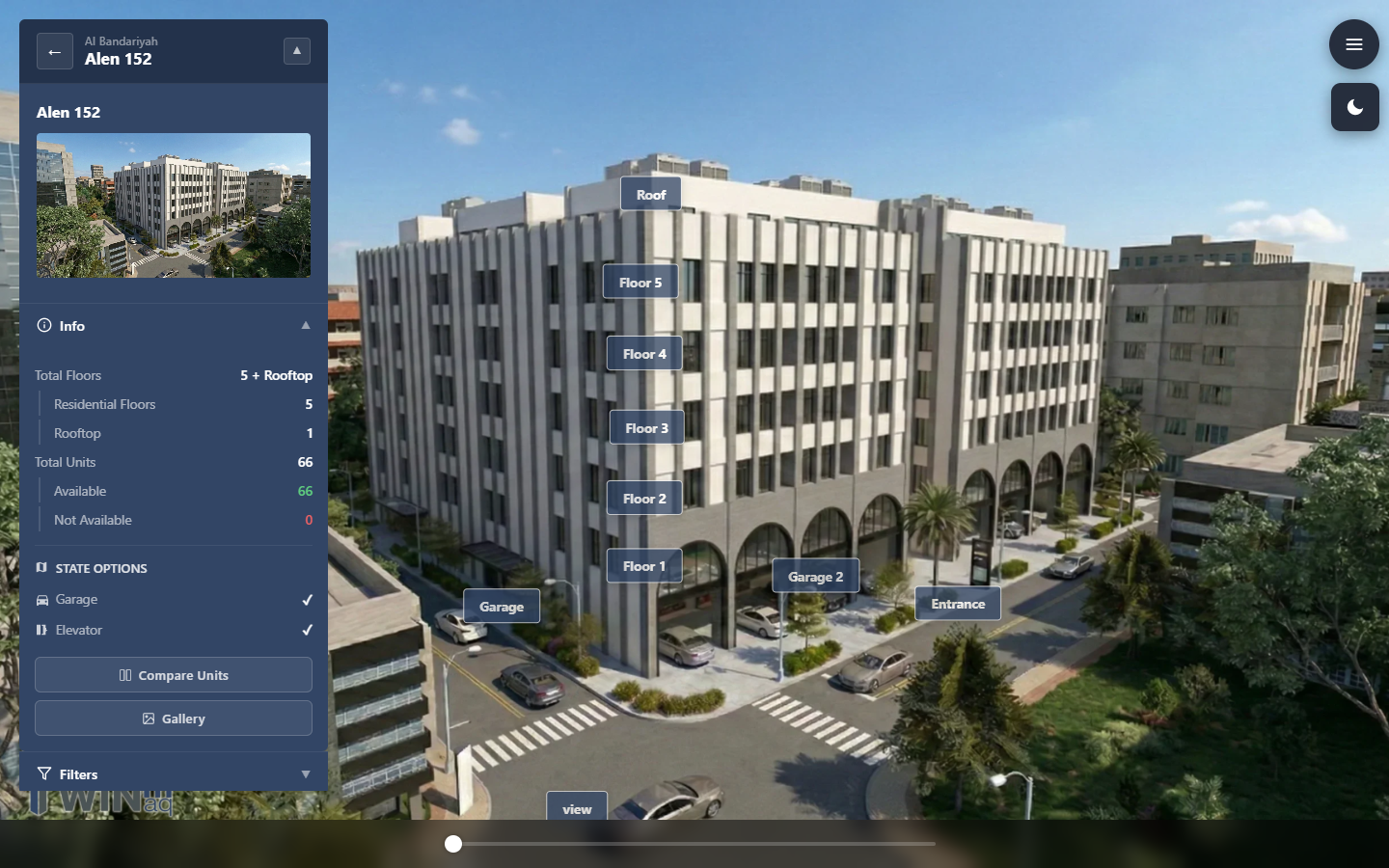
A Digital Twin is a live, operational digital replica of a built asset. It inherits the BIM model delivered at construction handover and connects it to real-time IoT sensor feeds, maintenance records, energy consumption, occupancy data, and CAFM/FM systems. Unlike BIM — which ends when construction completes — the Digital Twin runs for the asset's full operational life (typically 50+ years), giving facility managers a single source of truth for performance, maintenance, and decision-making. Design Zone's TwinMs platform is purpose-built for the BIM-to-Twin transition, with COBie-structured asset registries and direct API integration to Maximo, IBM TRIRIGA, and FM:Systems.
What does ISO 19650 certification mean for a BIM project?
ISO 19650 is the international standard for managing information across the lifecycle of a built asset using BIM. Certification means a delivery team has formally implemented Information Requirements (EIR), a BIM Execution Plan (BEP), and a Common Data Environment (CDE) aligned with the standard. For Saudi Vision 2030 projects, ISO 19650 compliance is increasingly mandatory in tender documentation. Design Zone authors EIRs, BEPs, and CDE configurations as a standalone service or as part of a full-lifecycle engagement.
Do you provide Scan to BIM services in Riyadh, Jeddah, and Dammam?
Yes. Design Zone delivers Scan to BIM (point cloud to BIM) services across Saudi Arabia, including Riyadh, Jeddah, Dammam, AlUla, and the Eastern Province. Our process: laser-scan the existing site or building with terrestrial LiDAR, register the point cloud, then convert to LOD 200–400 BIM models in Revit. Common applications include heritage restoration (HBIM for Diriyah Gate / AlUla), facility management as-built capture, and renovation impact analysis.
What is the difference between BIM and a Digital Twin?
BIM is the static design and construction model — geometry plus attribute data delivered at handover. A Digital Twin is the live, operational successor: it inherits the BIM model and connects it to real-time IoT sensor feeds, maintenance records, energy data, and CAFM systems. BIM ends when the building is complete; Digital Twin runs for the building's 50-year operational life. Design Zone's TwinMs platform is purpose-built for this BIM-to-Twin transition.
How does BIM coordination reduce construction costs?
BIM coordination uses clash detection across architectural, structural, and MEP models to identify conflicts before construction starts. Industry data shows 30–50% reduction in on-site rework when projects use coordinated BIM, with corresponding savings in schedule and contractor variation orders. On a typical Saudi giga-project tower, that translates to 4–8 weeks shaved off the construction schedule and 5–12% saved on the contractor cost. ROI on BIM coordination is typically achieved within the first construction phase.
What software does Design Zone use for BIM delivery?
As an Autodesk Authorized Partner, our primary stack is Revit (architecture, structure, MEP), Navisworks (clash detection and 4D), Civil 3D (infrastructure), and Autodesk Construction Cloud (CDE). For 5D cost integration we use Cubicost / CostX, and for Digital Twin operations we use our proprietary TwinMs platform. We also support Tekla for steel detailing and Synchro for 4D construction simulation when client standards require them.
Can Design Zone deliver projects outside Saudi Arabia?
Yes. Headquartered in Jeddah, with operational offices in Amman (Jordan) and Cairo (Egypt), Design Zone serves the broader GCC and Levant region. We have delivered BIM projects in the UAE, Jordan, Egypt, and Bahrain, and operate fluently in both English and Arabic deliverables. ISO 19650 is internationally recognized so our process is portable across jurisdictions.
How long does BIM Execution Plan (BEP) development take?
A typical BIM Execution Plan takes 2–4 weeks to author for a single building project, depending on project size, number of disciplines, and the maturity of the client's Information Requirements (EIR). Programs of work or master-planned developments require 4–8 weeks because of the multi-asset coordination matrix. Design Zone delivers BEPs as a standalone service or bundled with EIR authoring under our ISO 19650 Implementation engagement.